
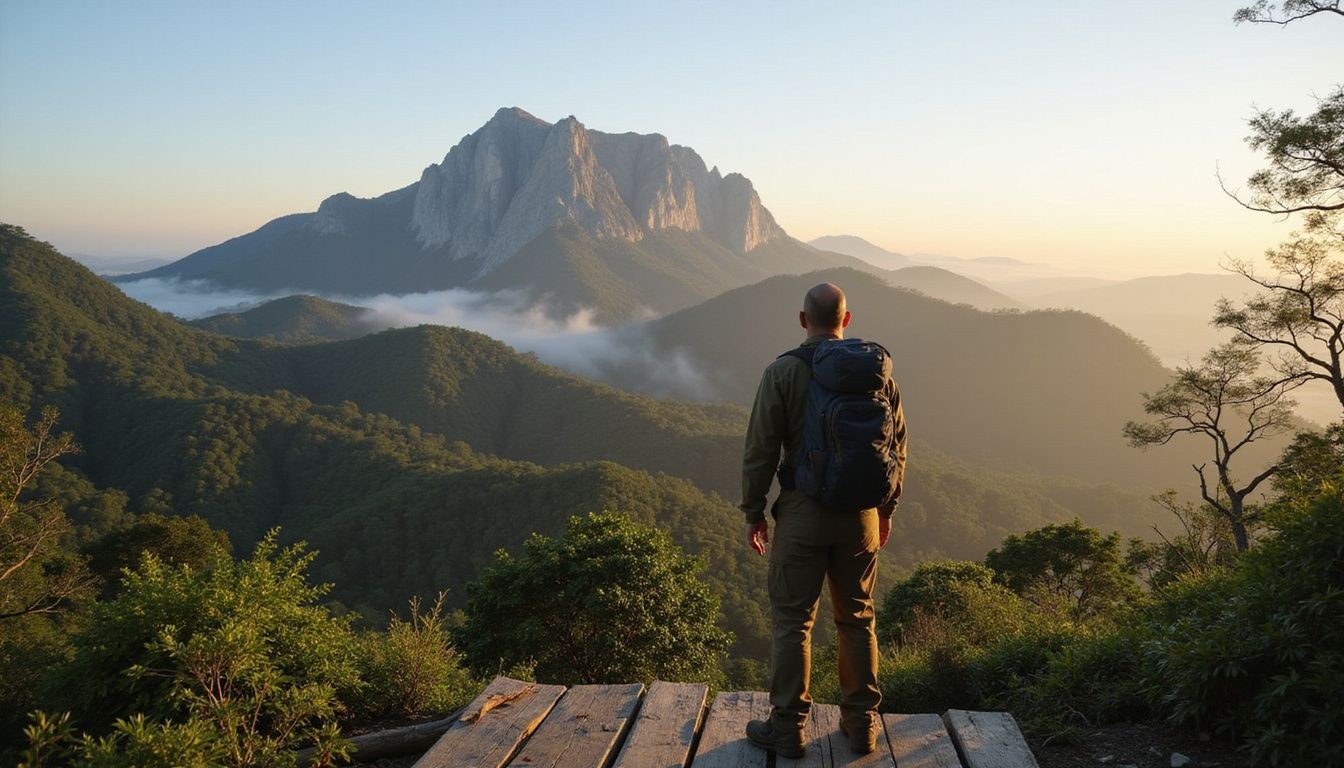
Planning the perfect Sabah itinerary can feel like a puzzle. You know there is an incredible mix of dense rainforest, unique wildlife, and pristine islands, but fitting it all together is the real challenge.It’s a common hurdle. Many travellers find themselves wondering how to balance seeing the iconic orangutans with relaxing on a white-sand beach, all while maybe even considering the mighty Mount Kinabalu.
Whether you have a quick three days or a full week, this guide will walk you through the best way to structure your time. We will cover everything from spotting wildlife along the Kinabatangan River to island hopping in Tunku Abdul Rahman National Park, all organised into daily schedules that make sense.
3-Day Sabah Itinerary
Our three-day guide is designed for a whirlwind tour of Sabah’s best features. It packs in the vibrant city culture of Kota Kinabalu, the cool highlands, and a taste of tropical island life.
Day 1: Explore Kota Kinabalu
We begin our Sabah adventure in Kota Kinabalu, affectionately known as KK. The city is a fantastic introduction to the blend of cultures and cuisines in Malaysian Borneo. We start at the Filipino Market, a bustling hub right on the waterfront that comes alive in the evening with vendors grilling fresh seafood.
From there, we explore Gaya Street, famous for its Sunday Market but also lined with traditional coffee shops, or *kopitiams*, on any day of the week. For a great view, we can head to the Signal Hill Observatory Platform. Though the main tower has been closed for renovations, the surrounding area still offers a good vantage point over the city and sea.
Just a 15-minute boat ride from the city is Tunku Abdul Rahman National Park, a cluster of five islands. We can catch a ferry from the Jesselton Point Ferry Terminal to explore its clear waters and marine life. Snorkelling is a popular activity here, revealing a vibrant underwater world.
As evening approaches, the KK Waterfront is the perfect place to be. We find a spot at one of the many restaurants to try traditional Sabahan dishes like *hinava*, a local ceviche made with fresh fish, lime juice, and ginger.
For an authentic taste of KK, head to the night market section of the Filipino Market. Here you can point directly to the fish, prawns, or squid you want, and they will grill it for you on the spot. It is fresh, delicious, and incredibly affordable.
Day 2: Mount Kinabalu & Kundasang
Leaving the city behind, we journey towards the majestic Mount Kinabalu and the cool highlands of Kundasang. The drive itself is scenic, winding through the lush Crocker Range and offering spectacular views of Borneo’s natural beauty.
Mount Kinabalu stands at an impressive 4,095 metres, making it Malaysia’s highest peak. While summiting requires a 2-day trek and a permit booked months in advance, the surrounding Kinabalu Park, a UNESCO World Heritage Site, offers plenty of accessible nature trails. As of early 2023, the climbing permit fee for international adults is RM 400.
A must-visit spot in Kundasang is the Desa Dairy Farm. With its black-and-white Holstein Friesian cows grazing against the backdrop of Mount Kinabalu, the scenery is often compared to New Zealand. Here we can enjoy fresh milk, cheese, and their popular gelato.
For a different kind of experience, we stop at Poring Hot Springs. It is an ideal place to soothe tired muscles in natural hot sulphur pools. For the more adventurous, the canopy walkway offers a bird’s-eye view of the rainforest from over 40 metres above the ground. Local guides often point out unique flora like the carnivorous pitcher plants that thrive in this unique mountain ecosystem.
Day 3: Island Hopping Adventure
White sandy beaches and turquoise waters define our final day as we go island hopping in Tunku Abdul Rahman Marine Park. Starting early from Jesselton Point, we board a speedboat to explore some of the park’s five beautiful islands.
Each island offers something slightly different:
- Sapi Island: Known for its excellent snorkelling right off the beach, where you can easily spot clownfish and parrotfish darting among the corals. It also has a thrilling zip line that connects it to Gaya Island.
- Manukan Island: The second-largest island and the most developed, offering great facilities, water sports like parasailing, and lovely forest trails for a short hike.
- Gaya Island: The largest island in the park, it is mostly covered in dense rainforest. It is a great spot for jungle walks where you might encounter macaques and various tropical birds.
Local operators at the terminal offer package deals for visiting two or three islands, which often include a packed lunch of fresh seafood. The clear ferry schedules make it easy to plan our time across different activities. It is the perfect blend of relaxation and adventure to conclude a short but memorable trip before heading deeper into Borneo on a longer stay.
5-Day Sabah Itinerary
With five days, we can expand our adventure to include Sabah’s incredible wildlife. This itinerary builds on the 3-day plan, taking us from the city and mountains to the riverbanks of the Kinabatangan, a haven for endemic species.
Day 1: Arrival and Kota Kinabalu City Tour
Upon arriving at Kota Kinabalu International Airport (KKIA), we dive straight into the city’s highlights. The waterfront buzzes with activity, offering stunning views across the South China Sea, while the historic Gaya Street is perfect for finding local crafts and street food.
We visit the magnificent Sabah State Mosque, with its striking gold dome, a beautiful example of the region’s religious architecture. For a dose of history, we stop by the Atkinson Clock Tower, the oldest standing structure in KK, dating back to 1905.
To understand the region’s rich heritage, the Sabah State Museum is a must-visit. Its exhibits cover everything from the indigenous cultures of Borneo to the state’s natural history and conservation efforts. It provides great context for the adventures that lie ahead.
Travel is not just seeing sights; it is an experience that changes you.
Day 2: Kundasang and Kinabalu Park
An early start takes us from Kota Kinabalu to the cool mountain climate of Kundasang. On a clear day, the 4,095-metre peak of Mount Kinabalu dominates the landscape, offering one of Southeast Asia’s most iconic views.
Our first stop is the Desa Dairy Farm, where we can watch Holstein Friesian cows grazing peacefully. Trying the fresh milk and gelato here is a highlight for many visitors. An insider tip is to visit on a weekday, as the farm can get very crowded on weekends and holidays.
Next, we explore Kinabalu Park, which was recognised as a UNESCO World Heritage site in December 2000 for its staggering biodiversity. The park is home to over 5,000 plant species. We take a guided walk along one of the shorter rainforest trails, like the Silau Silau Trail, to spot unique flora such as orchids and pitcher plants. After a day in the highlands, we are ready for the wilder landscapes of the Kinabatangan River.
Day 3: Wildlife Safari at Kinabatangan River
We travel to one of Borneo’s most important wildlife corridors, the Kinabatangan River. A river cruise here is the best way to see animals in their natural habitat. We often spot proboscis monkeys, with their distinctive long noses, leaping between riverside trees. With a bit of luck, we might even see a herd of Bornean pygmy elephants.
The river is a birder’s paradise, with all eight species of Bornean hornbills found here. Our guides are experts at spotting wildlife and share fascinating details about this fragile ecosystem. The best times for a cruise are late afternoon and dawn when the animals are most active.
The proboscis monkey is classified as Endangered by the IUCN, with its population declining due to habitat loss from palm oil plantations. Seeing them in the wild is a powerful reminder of the importance of conservation efforts along the Kinabatangan.
Staying at a riverside lodge in Sukau allows us to fully immerse ourselves in the experience. These lodges often run multiple river cruises, giving us more chances for incredible wildlife sightings before our visit to the Sepilok Orangutan Rehabilitation Centre.
Day 4: Sepilok Orangutan Rehabilitation Centre
Today we visit the world-renowned Sepilok Orangutan Rehabilitation Centre, a place where conservation comes to life. Opened in 1964, the centre has been instrumental in rehabilitating orphaned and injured orangutans for their return to the wild.
The main event is the daily feeding session at platforms within the reserve. Feedings take place at 10 am and 3 pm. Arriving at least 30 minutes early is a good idea to get a prime viewing spot. It’s a supplementary feeding, so while sightings are common, they are not guaranteed, which is a good sign of the centre’s success in encouraging natural foraging.
A pro-tip is to also visit the adjacent Bornean Sun Bear Conservation Centre. It’s the world’s only facility dedicated to the smallest bear species and offers a fantastic opportunity to see these rescued bears in large forest enclosures. The entrance fee for an international adult is RM 50. Walking through the lush reserve, it’s clear why Sepilok is a global leader in ecotourism and wildlife conservation.
Day 5: Island Hopping and Sunset Cruise
Our final day is a return to the coast for some well-deserved relaxation in Tunku Abdul Rahman Marine Park. We board a speedboat to visit a few of the park’s islands like Sapi, Manukan, and Mamutik. The park protects over 2,000 hectares of reef habitat, making it a vital conservation area.
We spend the day snorkelling in the crystal-clear waters, swimming, or simply relaxing on the soft sand beaches. Rangers on the islands remind visitors to be mindful of the fragile ecosystem by not touching the corals or disturbing the marine life.
To cap off our adventure, we join a sunset cruise along the Kota Kinabalu coastline. Watching the sun dip below the horizon, casting a warm glow over the South China Sea, is an unforgettable experience. A delicious seafood dinner is often served on board, providing a perfect moment to reflect on our amazing journey through Sabah.
7-Day Sabah Itinerary
A full week in Sabah allows for a truly immersive journey. We can explore deeper into pristine rainforests and visit world-class snorkelling sites, experiencing the full spectrum of Borneo’s incredible biodiversity and culture.
Day 1: Discover Kota Kinabalu
We start our week-long exploration in Kota Kinabalu. For an authentic local breakfast, we head to a *kopitiam* on Gaya Street before visiting the historic Atkinson Clock Tower, which has stood since 1905. The Sabah State Museum offers deep insights into Borneo’s indigenous cultures and conservation work.
In the afternoon, we make our way to Tanjung Aru Beach, widely regarded as one of the best places in Southeast Asia to watch the sunset. The vibrant colours painting the sky are truly spectacular. For dinner, we can explore the nearby food stalls or head to a well-known seafood restaurant like Welcome Seafood Restaurant for a feast.
An alternative adventure for the afternoon could be a visit to the Lok Kawi Wildlife Park for a close encounter with Borneo’s fauna or a mangrove river cruise to spot proboscis monkeys and fireflies.
Day 2: Visit Kundasang and Desa Dairy Farm
We set off early for the scenic drive to Kundasang, a town nestled in the highlands with cool air and incredible views of Mount Kinabalu. The landscape is dotted with vegetable farms and rolling green hills.
Our main stop is the Desa Dairy Farm, famous for its Holstein Friesian cows and New Zealand-like scenery. We watch the milking process and sample the farm’s fresh dairy products. It is best to visit on a weekday to avoid the large crowds that gather on weekends and public holidays.
We also take time to explore the Kundasang War Memorial. These tranquil gardens are dedicated to the Australian and British prisoners of war who died on the Sandakan Death Marches during World War II. It is a poignant and beautifully maintained site that adds a layer of historical understanding to our visit.
Day 3: Kinabalu Park and Poring Hot Springs
After a cool night in the highlands, we head to Kinabalu Park, a UNESCO World Heritage Site celebrated for its immense biodiversity. The park is home to over 5,000 plant species and more than 90 species of lowland mammals.
We embark on a walk along one of the park’s many trails, where a guide can help us spot fascinating flora like pitcher plants and rare orchids. The mountain air is crisp and refreshing, making it perfect for hiking.
Later, we travel about 40 kilometres to Poring Hot Springs. Here, we can soak in the natural hot sulphur pools, which are perfect for relaxing after a morning of trekking. For a unique perspective, we brave the canopy walkway, suspended more than 40 metres above the forest floor. It provides incredible views across the canopy of one of Borneo’s ancient rainforests.
Day 4: Sukau and Kinabatangan River Cruise
Our journey continues deep into Borneo’s rainforest to the Kinabatangan River. This area is one of the best places in Southeast Asia for wildlife viewing. We stay in the small village of Sukau, which serves as a base for our river adventures. Eco-lodges here, such as the acclaimed Sukau Rainforest Lodge, focus on responsible tourism.
We join a guided river cruise at sunset, the prime time for spotting animals. It is common to see wild orangutans, pygmy elephants, and troops of proboscis monkeys along the riverbanks. We keep our cameras ready to capture hornbills flying overhead and crocodiles resting on the muddy shores. A night cruise is also an option, offering a chance to see nocturnal creatures.
Day 5: Explore Danum Valley Conservation Area
For a truly special experience, we travel to the Danum Valley Conservation Area. This 438-square-kilometre tract of pristine, undisturbed lowland rainforest is a paradise for nature enthusiasts. A 2019 study even identified the world’s tallest tropical tree, a Yellow Meranti named ‘Menara’, right here in the valley.
The forest here is around 130 million years old and has an incredible density of wildlife. Guided treks offer opportunities to spot rare species like clouded leopards, Bornean gibbons, and over 300 bird species.
Staying at an eco-lodge like the Borneo Rainforest Lodge allows us to fully immerse ourselves in this ancient ecosystem. Key activities include:
- Canopy Walks: Offering stunning views from high above the jungle floor.
- Night Safaris: A chance to spot nocturnal animals like civets and flying squirrels.
- Jungle Trekking: Exploring trails that lead to ancient burial sites and cascading waterfalls.
Day 6: Sipadan and Mabul Islands Snorkelling
We head to the east coast for an unparalleled underwater adventure at Sipadan and Mabul Islands. Sipadan is world-famous for its incredible marine biodiversity, often ranked as one of the top dive sites on the planet.
Access to Sipadan is strictly controlled to protect its fragile ecosystem. Only 176 permits are issued daily for divers and snorkellers, so booking with a registered operator several months in advance is essential. The experience is worth the effort, as we swim alongside sea turtles, schools of barracuda, and vibrant coral reefs.
Sipadan Island is closed to all visitors every December to allow the marine ecosystem a period of recovery. It is a forward-thinking conservation measure proposed by the dive operators themselves.
While Sipadan is known for large marine life, nearby Mabul Island is a hotspot for macro life. Its shallower reefs are perfect for spotting smaller, fascinating creatures like nudibranchs and seahorses. The combination of these two islands provides a complete and unforgettable marine experience.
Day 7: Cultural Tour and Departure
For our final morning, we immerse ourselves in Sabah’s rich cultural heritage with a visit to the Mari Mari Cultural Village. This living museum showcases the traditional homes and lifestyles of five of Sabah’s major ethnic groups. We can learn about their crafts, see demonstrations of bamboo cooking, and understand ancient indigenous rituals.
It is an interactive and engaging way to appreciate the human history of Borneo. After the tour, we pick up some last-minute handicrafts at a local market before heading to Kota Kinabalu International Airport for our departure. We make sure to arrive at least two hours before our international flight, leaving with incredible memories of our adventure across Sabah.
Tips for Travelling in Sabah
A little planning goes a long way in Sabah. Smart preparation helps us navigate the state’s unique adventures smoothly, ensuring a more enjoyable and hassle-free holiday.
Best Time to Visit
The best time to visit Sabah is during the dry season, which typically runs from March to September. During these months, you can expect clearer skies and less rain, making it ideal for hiking Mount Kinabalu, island hopping, and wildlife spotting.
July and August often have the best conditions for snorkelling and diving around islands like Sipadan, with calm seas and excellent visibility. The wet season, from November to January, brings heavier rainfall, which can disrupt outdoor activities. However, the rainforest is incredibly lush during this time, and there are fewer crowds.
Transportation Options
Getting around Sabah is relatively straightforward. For travel between major cities like Kota Kinabalu, Sandakan, and Tawau, domestic flights with airlines like AirAsia are fast and affordable. For shorter distances, you have a few good options.
| Option | Best For | Average Cost/Details |
| Ride-Hailing (Grab) | City travel, airport transfers | A ride from KKIA to the city centre costs around RM 17. |
| Long-Distance Bus | Travel to Kundasang or Sandakan | A bus from Kota Kinabalu to Kundasang takes about 4 hours and costs around RM 30-43. |
| Car Rental | Flexibility and exploring remote areas | Offers freedom, but be prepared for steep, winding roads in highland areas. |
| Licensed Boats | Island hopping, river cruises | Scheduled tours are available from Jesselton Point for islands and along the Kinabatangan River for wildlife. |
It is always a good idea to verify schedules in advance, especially for buses, as services can be less frequent outside of peak tourist seasons.
Packing Essentials
Packing for Sabah means preparing for a variety of environments, from humid rainforests to cool mountains and sunny beaches. Lightweight, practical items are key.
Here are some must-haves:
- Breathable Clothing: Quick-dry fabrics are perfect for the humid climate and jungle treks.
- Rain Jacket: A lightweight, waterproof jacket is essential for unexpected tropical downpours.
- Insect Repellent: Choose one with DEET to protect against mosquitoes in rainforest areas.
- Sturdy Footwear: Comfortable walking shoes or hiking boots are a must for trails in Kinabalu Park or Danum Valley.
- Reef-Safe Sunscreen: Protect your skin and the coral reefs during island hopping adventures.
- Reusable Water Bottle: Stay hydrated and help reduce plastic waste in protected parks.
- Power Bank: Charging points can be scarce in remote lodges, so a portable charger is crucial.
Conclusion
These Sabah itinerary options provide a fantastic balance of nature, wildlife, and adventure, tailored for different lengths of stay. We can immerse ourselves in ancient rainforests, stand atop majestic mountains, and witness incredible animals in their natural habitats.
Each day in this part of Borneo offers new opportunities for exploration and creating lasting memories. With thoughtful planning and the right tips, our journey can be an unforgettable adventure that also supports vital local conservation efforts.


Comment (0)