
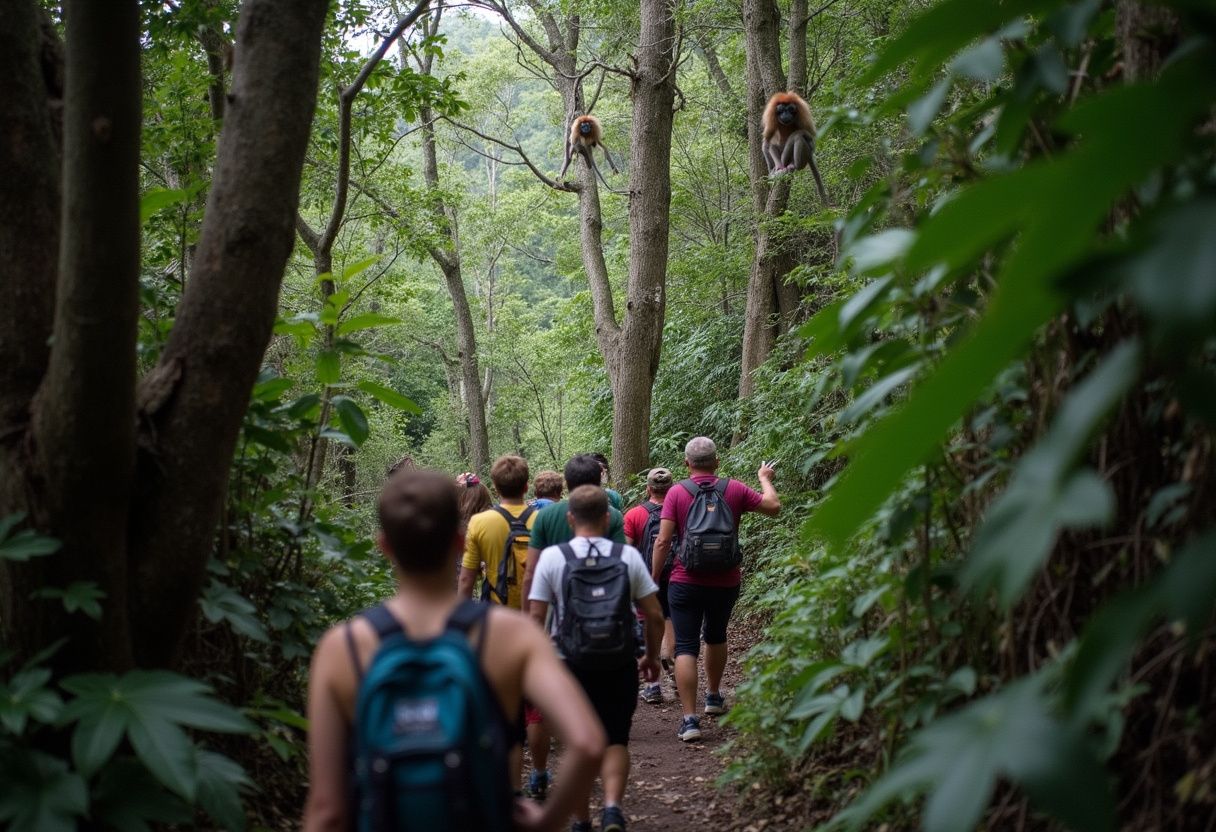
As a tour guide who has led countless trips through Malaysian Borneo since 2012, I can tell you that planning a day trip to Bako National Park often feels more complicated than it needs to be. You hear about the incredible proboscis monkeys and the winding jungle trails, but the logistics can seem daunting.
You’re in the right place.
I’m going to walk you through a simple, step-by-step plan to make your day trip a massive success. We’ll cover everything from the best way to get there to the must-see hiking trails and wildlife photography spots. By the end, you’ll have a clear plan that removes all the guesswork from your Bako adventure.
Key Takeaways
- To get to Bako from Kuching, the red public bus Number 1 is the cheapest option at around RM 3.50, while a Grab ride costs about RM 30-38. Once you arrive at the Kampung Bako jetty, the required boat ride to the park entrance has a set return fee of RM 40 per person for foreigners.
- The park entrance fee is RM 20 for foreign adults and RM 7 for children (ages 7-18), while Malaysians pay RM 10 for adults and RM 3 for children. All fees at the jetty must be paid in cash.
- The Telok Pandan Kecil trail is a top choice for day-trippers, offering a 1.5-hour hike (one way) to a stunning cliff viewpoint and a secluded beach. For easier wildlife spotting, the Teluk Paku trail is a shorter one-hour hike known for frequent proboscis monkey sightings.
- For your safety, swimming is strictly forbidden everywhere in the park due to the presence of estuarine crocodiles. Sarawak Forestry has placed clear “Do Not Swim” signs along all beaches and waterways, and these rules are enforced.
- Essential items to pack include sturdy walking shoes with good grip, a raincoat for sudden showers (especially from November to February), and a strong mosquito repellent. The park’s canteen has limited options, so bringing extra water and snacks is a smart move.
Getting to Bako National Park

The journey to Bako National Park is an adventure in itself, starting with a trip from Kuching to the Bako Jetty. From there, a small boat will take you on a scenic ride past dense mangrove forests. Keep an eye out, as this is your first chance to spot wildlife, including the occasional crocodile near the shore.
What are the transportation options from Kuching to Bako National Park?
You have a few solid options for getting from Kuching to the Kampung Bako jetty.
The most budget-friendly choice is the public bus. Look for the red bus, Number 1, which departs hourly from the bus station near the Open Air Market and also has a stop opposite the Riverside Majestic Hotel. The fare is just RM 3.50 for a one-way trip, which takes about an hour.
For a faster and more direct route, using the Grab app is your best bet. A car ride will take 30-40 minutes and typically costs between RM 30-38 each way. A traditional taxi is also an option, but it’s more expensive, usually running RM 60-70 for a single trip.
Once you arrive at the jetty, the final leg of the journey is a 20-30 minute boat ride to the park headquarters. The return boat fee is fixed at RM 40 per person for foreigners and RM 30 for Malaysians. Keep in mind that during the wet season, from November to February, boats are limited to four passengers for safety reasons.
How much are the park entrance fees and permits?
When you get to the Bako Jetty, you’ll need to handle the park fees before you can board your boat. The entrance fee for foreign adults is RM 20, and it’s RM 7 for children between the ages of seven and eighteen.
Malaysian citizens receive a discount, paying RM 10 for adults and RM 3 for children. Children under six get in for free. A crucial tip I always give my groups is to bring cash, as credit card payments are not accepted at the fee counter.
This fee covers your day access to the park’s trails through its mixed dipterocarp and peat swamp forests. It does not include accommodation or guided tours. If you’re considering an overnight stay, you should book lodging well in advance through the official Sarawak Forestry e-booking website. Guided night safari tours are a popular add-on and can be booked at the park headquarters for around $5-$6 USD per person.
Morning Activities
Your day truly begins with the boat ride from Bako Jetty, offering incredible views of the mangrove forests and coastline. Once you arrive, the area around the park entrance is buzzing with activity. This is an excellent time for wildlife photography, as you might spot bearded pigs or even a proboscis monkey right away.
What is the boat ride to Bako National Park like?
The boat ride from Kampung Bako is on a small speedboat that takes about 20 to 30 minutes to reach the park. As you cruise along the water, you’ll pass rugged sandstone cliffs and pristine, untouched beaches. Have your camera ready, as the scenery is fantastic. You may even see the park’s famous sea stack formation from the water, depending on the route your boatman takes.
One thing I always stress to travelers is to take the safety warnings seriously. The waters here are home to estuarine crocodiles, and the population has increased in recent years. You will see prominent “Do Not Swim” signs posted by Sarawak Forestry, and these are not just suggestions. It’s a strict rule to ensure everyone’s safety.
Before you head out on the trails, make sure to arrange your return boat trip with the park staff. They coordinate with other visitors to schedule the departures, so it’s best to sort this out early.
Where can I spot wildlife near the park entrance?
You don’t have to venture far to see wildlife in Bako. The area around the park headquarters is a fantastic spot for your first encounters. The animals here are more accustomed to people, which makes for great photo opportunities.
Here are a few common sightings:
- Bornean Bearded Pigs: These are almost always seen scavenging for food near the park canteen.
- Long-tailed Macaques: These bold monkeys are often found near the accommodation buildings, so keep a close eye on your belongings.
- Silvered Leaf Monkeys: Unlike the macaques, these are gentle and shy creatures. Look for them in the trees, where you might also spot their bright orange infants.
- Proboscis Monkeys: While they can be elusive, the park is home to around 275 of them. The early morning hours are one of the best times to spot a harem crashing through the trees.
The best times to see most animals are just after dawn and in the hours before dusk when they are most active. Move quietly, and you’ll be surprised what you find.
Popular Hiking Trails
Bako National Park is famous for its jungle trails, with options for every fitness level. As you trek through the lush forests, you’ll have more chances to spot proboscis monkeys and bearded pigs, making it a dream for wildlife photography.
Telok Pandan Kecil Trail
In my experience, the Telok Pandan Kecil trail is the most rewarding hike for day-trippers. It’s a 1.5-kilometer trek that takes about 90 minutes each way at a comfortable pace. The path leads you through a mix of dipterocarp forest before opening up to an exposed plateau where you can find carnivorous pitcher plants lining the sandy trail.
The payoff is the cliff viewpoint, one of the most iconic photo spots in all of Malaysian Borneo. It offers a breathtaking panoramic view of the secluded bay and the famous sea stack just offshore. From there, it’s a short 10-minute descent to Kecil Beach, a beautiful stretch of sand perfect for relaxing after your hike. Just remember, no swimming is allowed due to the crocodile risk.
Teluk Paku Trail
If your main goal is to see a proboscis monkey, I highly recommend the Teluk Paku Trail. This trail is shorter, at just 0.8 km one way, and typically takes about an hour each way. It’s known among park rangers as one of the best places to spot these unique primates, especially in the early morning or late afternoon.
The path itself is well-shaded and follows color-coded markers, making it an easy and pleasant walk through the coastal forest. Besides proboscis monkeys, you might also see bearded pigs, monitor lizards, and a variety of birds. The trail ends at a small, quiet beach on the South China Sea, a perfect spot to rest before heading back.
Midday Break
After a morning of hiking, the park canteen offers a simple lunch with local Sarawak flavors. You can also take some time to relax on Kecil Beach, but always be aware of your surroundings and the local wildlife.
Where can I have lunch at Bako National Park?
The main option for lunch is the canteen located near the park headquarters. It serves a basic self-service buffet with dishes like fried rice, noodles, a chicken or fish option, and vegetables. Be prepared to pay with cash, as cards are not accepted. The canteen can get quite crowded during peak lunch hours, so it’s a good idea to either eat a bit early or later.
Frankly, the food gets mixed reviews. For this reason, I often suggest that visitors pack their own lunch or at least bring some substantial snacks like fruit bars and nuts to supplement the meal. Vegetarian options are often very limited.
How can I relax at Kecil Beach?
After hiking the Telok Pandan Kecil trail, the beach at the end is a fantastic place to unwind. Find a spot under the shade of the trees to enjoy the sea breeze and the stunning views of the cliffs and unique rock formations. It’s an ideal setting for photography or simply soaking in the natural beauty of the park.
However, I cannot stress this enough: do not swim. The risk of estuarine crocodiles is real, as sightings have become more frequent over the past decade. Sarawak Forestry staff have posted clear “Do Not Swim” signs for your safety, so please follow them. You can still enjoy a picnic on the sand or look for shells, but always stay alert and stick to the marked paths.
Afternoon Adventures
As the midday heat subsides, the jungle comes alive again, offering new opportunities for wildlife sightings. If you’re up for another challenge, a tougher trail awaits, or you can plan for a unique after-dark experience.
What can I expect on the Ulu Assam Trail?
The Ulu Assam Trail is for those looking for a real challenge. While it’s only 0.8 kilometers long, it’s a steep and demanding hike that takes about 1 hour and 15 minutes one way. The trail is marked with blue and red color codes and requires you to navigate steep slopes by holding onto tree roots to keep your balance.
Because it’s a more difficult and less-traveled path, it’s much quieter than the other trails. This peaceful environment increases your chances of spotting shyer wildlife, like flying lemurs or even a reclusive proboscis monkey. Proper hiking shoes with excellent grip are essential here, as the terrain can become very slippery, especially after it rains.
How do guided night safari tours work?
If you decide to stay overnight, a guided night safari is an absolute must. These tours begin just after sunset and last for about one to two hours. You can book your spot at the park headquarters for a fee of around $5 to $6 USD per person. I recommend booking as soon as you arrive, as the groups are kept small and fill up quickly.
A trained guide from Sarawak Forestry will lead you along the boardwalks near the headquarters. They provide flashlights, though you can bring your own. On these walks, you enter a different world. You can spot nocturnal creatures like the flying lemur, palm civets, colorful frogs, and a variety of fascinating insects. Sometimes, you can even see sleeping monitor lizards or hear the calls of owls, offering a completely different perspective on the park’s rich biodiversity.
Essential Tips for Your Trip
A little preparation goes a long way in ensuring your day at Bako is enjoyable and safe. Pack smart, stay aware, and you’ll be ready for an incredible day of exploring the jungle trails and spotting rare wildlife.
What should I pack for a day trip to Bako National Park?
Based on my years of guiding here, I’ve perfected the day trip packing list. You don’t need much, but the right items make a huge difference.
| Item | Reason |
|---|---|
| Sturdy Shoes with Good Grip | Trails can be muddy and slippery with roots. Trail runners are a great choice. |
| Lightweight Raincoat or Poncho | Rain showers can appear suddenly, especially during the wet season (November-February). |
| Mosquito Repellent | Essential for the jungle. I recommend one with at least 30% DEET. |
| Sun Hat and Sunscreen | The sun is strong, especially on the open plateaus and beaches. |
| At Least 1.5 Liters of Water | The humidity is high, and dehydration is a real risk. Don’t rely on the canteen. |
| Snacks | Energy bars, fruit, or nuts will keep you going. Canteen options are limited. |
| Camera with Zoom Lens | To capture wildlife from a respectful distance without disturbing them. |
What safety precautions should I follow?
Your safety is the top priority. Bako is a wild place, and it’s important to respect that. First and foremost, never swim in the sea or rivers. The danger from estuarine crocodiles is serious, and all warning signs from Sarawak Forestry must be obeyed.
Always stay on the marked jungle trails and boardwalks. Wandering off-path can lead you into dangerous terrain or an unexpected wildlife encounter. Be particularly cautious around the long-tailed macaques. They are clever and have been known to snatch food and bags. Keep your food sealed and packed away.
Finally, let someone know your hiking plans. When you arrive, check in at the park headquarters and take a photo of the trail map. This way, the park staff knows where you are and can assist if you don’t return on time. By following these simple rules, you can focus on enjoying the incredible nature around you.
Conclusion
A day at Bako National Park is a powerful dose of Sarawak’s untamed spirit. It’s a place where every jungle trail leads to a new discovery, from sandy coves to encounters with remarkable wildlife.
You can see proboscis monkeys leaping through the canopy and bearded pigs foraging below.
With a bit of smart planning, your trip to this corner of Malaysian Borneo will be an unforgettable adventure, bringing you closer to nature than you ever expected.
FAQs
1. What wildlife can I expect to see during a day trip to Bako National Park?
You are almost guaranteed to see the endemic proboscis monkeys, especially in the early morning, along with Bornean bearded pigs scavenging around the park headquarters. In my experience, you’ll also likely spot long-tailed macaques, silver-leaf monkeys, and large monitor lizards near the Telok Assam area. Keep an eye out for silvered langurs and the occasional flying lemur as well.
2. How do I get to Bako National Park from Kuching?
You must first travel 37 km from Kuching to the Bako Boat Terminal, which takes 45-60 minutes by bus or about 30 minutes by taxi or a Grab car. From the jetty, it is a required 20-minute boat ride to the park entrance, which costs around RM 40 per person for a return trip for foreigners. The last boat typically departs from the park at 3 PM, so I always advise my clients to leave Kuching by 8 AM to maximize their day.
3. Are there any fees or permits required for visiting Bako National Park?
Yes, the entrance fee for foreign adults is RM 20 per person, which you pay at the Bako Jetty before boarding the boat.
4. Which hiking trails are best for spotting proboscis monkeys and other rare species?
For the best chance of seeing proboscis monkeys on a day trip, I recommend the Telok Paku or Telok Delima trails, as they are relatively short and pass through prime monkey habitat. The Ulu Assam trail also offers frequent sightings, though it involves a steep climb with rewarding views of the coastline. Be sure to move quietly and listen for their distinct grunting sounds or the crashing of branches.
5. Is it possible to explore Bako National Park fully in one day?
A one-day itinerary allows you to experience key highlights, like seeing proboscis monkeys and trekking one or two of the shorter jungle trails, such as the popular Lintang loop. However, a full exploration is not possible, as you will miss the nocturnal creatures like the flying lemur and slow loris that are only visible on guided night hikes, which require an overnight stay.


Comment (0)