
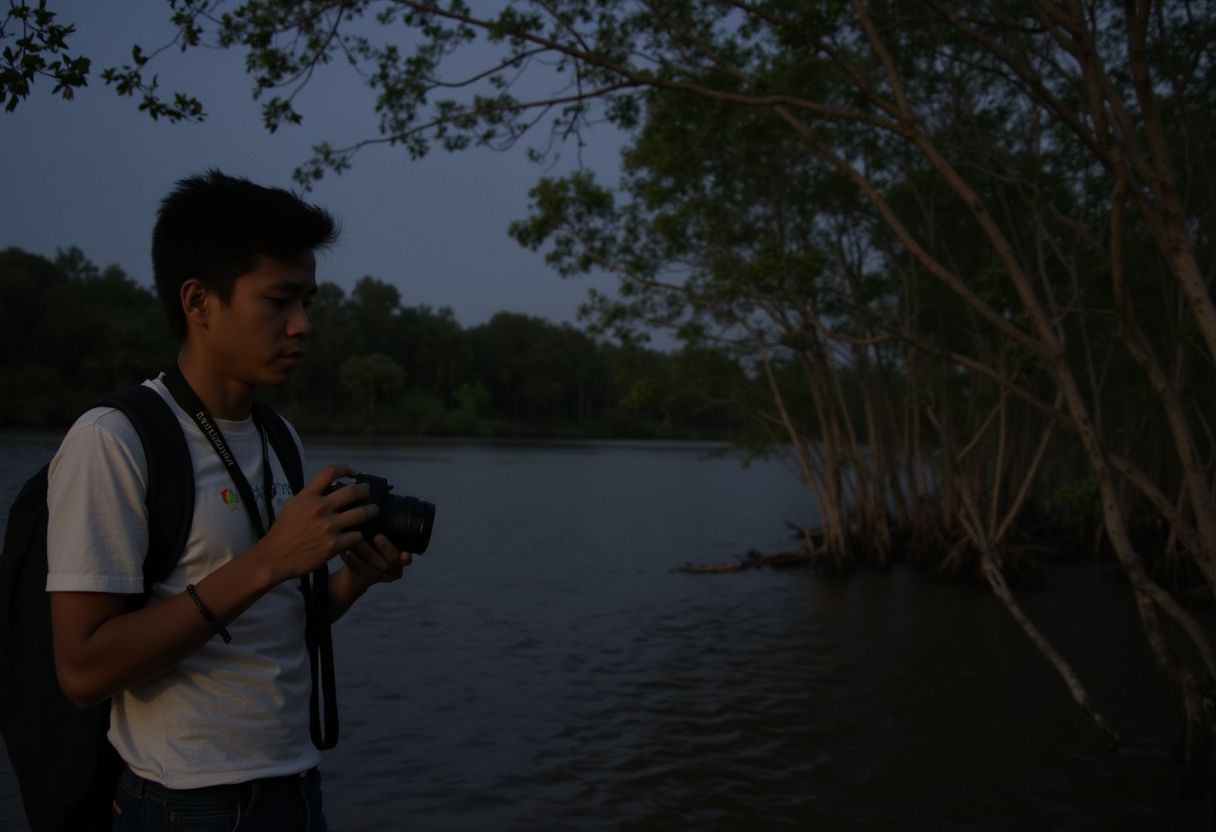
You know how getting a clear, magical shot of glowing fireflies feels almost impossible, especially at night on the Selangor River. In my years of leading tours for MyTravelLane, I’ve seen countless people end up with blurry, dark photos, missing the incredible synchronized flashes altogether.
It’s a common frustration.
But here’s the thing we’ve learned after countless trips to places like Kampung Kuantan: you absolutely can capture the magic of the kuala selangor fireflies. It just takes a bit of insider knowledge.
This guide is built on that experience. We’re going to walk through the simple tips, key settings, and practical gear choices that make a real difference, even if you’re just starting with a smartphone. We’ll show you how to get those sparkling shots without disturbing the very creatures we’re here to see.
Key Takeaways
- For the best shots of Pteroptyx tener fireflies, use a DSLR or mirrorless camera with high ISO capabilities (ISO 800-3200) and a wide aperture lens (f/1.4-f/2.8). Prime viewing times at spots like Kampung Kuantan Firefly Park are between 7:45 PM and 11:30 PM.
- A tripod is non-negotiable for sharp, long exposure photos (5-20 seconds). This is especially true when shooting the synchronized flashing near berembang trees, where even the slightest movement from the boat can cause blur.
- Flash photography is strictly forbidden on all tours. As guides, we enforce this rule because the flash disrupts the fireflies’ mating signals and can harm their populations along the Selangor River.
- Aim for dark, moonless nights after 8:00 PM for the best results. A full moon can easily wash out the faint light trails, while rain can reduce overall firefly activity.
- Dress appropriately in lightweight, long-sleeved clothing and use mosquito repellent. On crowded boats, it’s courteous to keep your gear compact and avoid blocking others’ views or making loud noises.
What Makes Photographing Fireflies Difficult?

Capturing fireflies, like the local Pteroptyx tener, really tests your photography skills. These tiny insects flash and move quickly in the deep darkness of the mangrove trees. To get a great shot, we need to balance the challenges of low light along the Selangor River with the constant motion of both the fireflies and our boat.
How do low light conditions affect firefly photography?
Low light is both the biggest challenge and what makes firefly photography so magical. The fireflies along the Selangor River are most visible after 8:00 PM on moonless nights, when their natural glow isn’t competing with other light sources.
Any significant ambient light, especially from a full moon, dramatically reduces the visibility of their synchronized flashes among the berembang and mangrove trees. According to research from Tufts University, this kind of light pollution doesn’t just make them harder to see, it actively disrupts their mating rituals.
Without true darkness, our cameras can’t capture the delicate light trails. We rely on longer exposure times to gather enough light, but this increases the risk of motion blur. It’s a delicate balance, but using the right camera settings in places like Firefly Park Resort helps us capture those glowing moments perfectly.
How can I avoid motion blur and capture the right timing?
To avoid motion blur, we always tell our guests to have their tripod set up before the firefly show begins. The gentle rocking of the sampans is enough to ruin a handheld shot, so a stable base is essential. A great tip we’ve learned is to use the camera’s 2-second self-timer or a remote shutter release. This prevents the small shake caused by pressing the shutter button.
The Pteroptyx tener fireflies are only about 5 mm long and are known to flash in unison at a rate of about three times per second. To freeze this rapid action, using your camera’s burst mode can be very effective. This allows you to capture a sequence of shots, increasing your chances of getting a perfectly timed image.
On a fireflies tour, we also recommend opening your aperture as wide as possible, ideally to f/1.4 or f/2.8. This lets in more light, allowing for a faster shutter speed and a lower ISO, which results in cleaner, sharper images with less digital noise.
Why are there restrictions on flash photography with fireflies?
On every tour we lead at MyTravelLane, we are very strict about the no-flash rule, and for good reason. Flash photography disorients the fireflies and interrupts the very behavior we’ve come to see along the Selangor River. These insects, particularly the Pteroptyx tener, use their synchronized flashing as a call-and-response to find mates in the dense mangrove trees.
A 2020 study led by Sara Lewis of Tufts University identified artificial light as the second-most serious threat to fireflies globally, as it directly interferes with their courtship exchanges.
A single camera flash can scramble these signals, reducing mating success and threatening the local population over time. The local conservation guidelines, which we strongly support, prohibit artificial lights to protect these delicate creatures. Enforcing this ensures that the experience remains magical for everyone while contributing to the preservation of the mangrove ecosystem around Kuala Selangor.
Essential Equipment for Firefly Photography
Clear shots in the dark require the right equipment. A steady setup and a camera that performs well in low light are foundational. With just a few key pieces of gear, we can make capturing beautiful firefly photos much easier.
Which DSLR or mirrorless cameras are best for fireflies?
For capturing fireflies, we’ve seen the best results from cameras that excel in low light. Full-frame mirrorless models like the Canon EOS R6 Mark II or the Sony α7S III are fantastic because their larger sensors handle high ISO settings with minimal noise. For those on a more modest budget, APS-C cameras like the Nikon Z50 also deliver excellent results due to their strong low-light performance.
Portability is also important, as we’re often shooting from small sampan boats. A lightweight camera is easier to handle. Weather-sealing is a huge plus, as the humidity on the river can be intense.
Even modern smartphones can get the job done. Newer models from Apple and Samsung have impressive night modes. To get the most out of them, we recommend using a third-party app like ProCam X or Camera FV-5, which allows manual control over ISO and shutter speed.
Why do I need a tripod for firefly photography?
Once you have a capable camera, stability is the next critical factor. A tripod is absolutely essential for firefly photography, especially during our boat tours along the Selangor River. The low light requires slow shutter speeds, and any handheld movement will result in motion blur, ruining your shot.
Setting up a tripod provides the steady support needed for long exposure shots. It’s the only way to capture the beautiful, trailing lights of the Pteroptyx tener as they flash among the berembang trees.
For boat tours, we’ve found that flexible-leg tripods, like the Joby GorillaPod, are incredibly useful. They can grip onto the boat’s railings, saving space and providing a stable platform without getting in the way of other guests. For shots on land near Bukit Melawati, a lightweight travel tripod is perfect.
What are the advantages of using wide aperture lenses?
A wide aperture camera_lens is your best friend when shooting fireflies. Lenses with an aperture of f/1.4 to f/2.8 let in significantly more light, which is crucial in the dim conditions along the Selangor River. This extra light allows for faster shutter speeds to freeze the fireflies’ flashes and prevent motion blur, even from a moving boat.
Here are a few affordable lens options we often recommend:
- Samyang/Rokinon 14mm f/2.8: A popular and affordable manual focus lens great for capturing wide scenes of the mangrove ecosystem.
- Sigma 35mm f/1.4 ART: An excellent choice that gathers a huge amount of light, allowing for lower ISO and cleaner images.
Because flash photography is not allowed, these “fast” lenses are the key to getting bright images without pushing the ISO too high, which would introduce unwanted grain. A wide aperture also creates a shallow depth of field, making the glowing fireflies stand out against a soft, dreamy background.
How Should I Set My Camera for Firefly Photography?
Getting your camera settings right is where the technical skill comes in. Adjusting your ISO, shutter speed, and aperture correctly is the key to capturing the magic of the fireflies on a dark night among the mangrove trees. Let’s walk through the ideal settings we use on our tours.
What ISO settings work best for fireflies?
On the Selangor River after 7:30 PM, we rely on higher ISO settings to make the camera’s sensor more sensitive to the faint glow of the Pteroptyx tener fireflies. A range between ISO 800 and 3200 is typically the sweet spot. This balances light sensitivity without introducing too much digital noise into the photos.
Using a wide aperture lens helps keep the ISO lower, but you may need to adjust it based on factors like moonlight or rain. A higher ISO can also help reduce motion blur if the boat is moving more than usual.
A pro tip for managing noise is to use software in post-processing. Tools like Topaz DeNoise AI or DxO PureRAW are incredibly effective at cleaning up images taken at high ISO settings, allowing you to shoot with more confidence in the dark.
How do I adjust shutter speed for firefly shots?
After setting your ISO, adjusting the shutter speed is the next critical step. A longer shutter speed, or exposure time, allows the camera to capture the fireflies’ light trails as they move. We generally start with settings between 5 and 20 seconds. This range is great for capturing multiple flashes from a group of fireflies without overexposing the scene.
However, an even better technique is image stacking. Instead of one very long exposure, try this:
- Take multiple shorter exposures (e.g., 15 shots at 4 seconds each).
- Use free software like StarStax or Sequator to automatically blend these images together.
This method produces a final image that is dotted with sharp points of light rather than long, blurry trails. It also reduces noise and gives you more control over the final look. On a moving boat, we find that keeping individual exposures under 8 seconds helps minimize blur from the boat’s drift.
What aperture settings are ideal for firefly photos?
Shutter speed is just one piece of the puzzle. As we’ve mentioned, wide aperture settings like f/1.4 to f/2.8 are ideal for firefly photography in Kuala Selangor. These settings allow the maximum amount of light to hit the sensor, which is essential when your subjects are tiny, 5 mm insects flashing in the dark.
A wide aperture helps in several ways:
- It allows for faster shutter speeds to prevent motion blur.
- It keeps the ISO lower, resulting in cleaner, less noisy images.
- It creates a beautiful background blur (bokeh) that makes the fireflies pop.
Because flash is not permitted near the Pteroptyx tener, a fast lens with a wide aperture is not just a recommendation, it’s a necessity for achieving high-quality results.
Techniques for Capturing Fireflies
Night photography with fireflies is all about highlighting their magical glow, and that requires a bit of planning. Let’s talk about the specific techniques and smart tricks that will help you capture those stunning glowing trails near the berembang trees along the Selangor River.
How does long exposure photography help with fireflies?
Long exposure photography is the core technique for capturing the synchronized flashing of the kuala selangor fireflies. By keeping the camera’s shutter open for several seconds, we can collect light from hundreds of individual flashes in a single frame. This transforms their quick, tiny sparks into beautiful glowing trails across the image, especially after 7:30 PM.
A tripod is absolutely crucial here. The slightest movement from your hands or the boat will ruin a long exposure image. This technique is what allows us to show the true density of the firefly swarms along the mangrove trees, creating a scene that looks like a star-filled sky right on the river.
When and how should I use manual focus?
Even the best cameras will struggle to autofocus in the near-total darkness of a firefly tour. That’s why we always switch to manual focus. The Pteroptyx tener are too small and dim for most autofocus systems to lock onto, especially from a moving boat.
Here’s a reliable, step-by-step method for focusing in the dark that we teach on our tours:
- Switch to Live View: Use your camera’s LCD screen instead of the viewfinder.
- Find a Light Source: Aim your camera at a distant, stationary light, like a light from a building on the far shore.
- Magnify the View: Use your camera’s digital zoom function to magnify that point of light on your screen.
- Adjust the Focus Ring: Carefully turn the focus ring until the point of light is as small and sharp as possible.
- Lock It In: Once focused, be careful not to touch the focus ring again. Some photographers even use a small piece of gaffer tape to hold it in place.
Modern mirrorless cameras often have a feature called “focus peaking,” which highlights the in-focus areas of the screen in a bright color. This makes manual focusing in the dark even easier.
How do I choose the right composition for firefly photos?
We often use the silhouette of the berembang trees along the Selangor River to create a natural frame for our firefly photos. Positioning these glowing trees against the dark water or sky can make for a very striking image. Shooting from a boat also allows for creative angles, and including the shimmering reflections on the water is a favorite trick of ours.
Consider these classic composition tips:
- Rule of Thirds: Place the main cluster of fireflies or the most interesting tree off-center.
- Leading Lines: Use the riverbank or the reflection on the water to draw the viewer’s eye into the scene.
- Add a Foreground Element: Including the silhouette of your boat or a nearby mangrove branch can add depth and a sense of scale to your photo.
Timing is also part of composition. The flashes are often most dense just after 8:00 PM, which is the perfect time to capture wide shots filled with twinkling lights.
Best Locations for Firefly Photography
Great photos start with great locations. In Kuala Selangor, this means finding spots along the river where the fireflies congregate in large numbers among the mangrove and berembang forests. Let’s look at the two main spots that offer fantastic views of the synchronized flashes.
What makes Kampung Kuantan Firefly Park a great spot?
Kampung Kuantan Firefly Park is often considered the classic firefly experience because its tours are run by the district council, ensuring a focus on conservation and local expertise. Here, we explore the scenic Selangor River in traditional, non-motorized sampans. These small, quiet boats are rowed by local oarsmen, which is not only eco-friendly but also perfect for photography since there’s no engine vibration.
The fee is around RM50 per boat, which holds a maximum of four people, making it a peaceful and intimate trip. The park operates from 7:45 PM to 11:30 PM, giving you plenty of time to capture the famous synchronized flashes from the thousands of Pteroptyx tener fireflies that illuminate the berembang trees.
Why visit Firefly Park Resort (Bukit Belimbing) for fireflies?
Firefly Park Resort in Bukit Belimbing offers a slightly different but equally magical experience. The resort is situated right on the Selangor River, surrounded by the prime mangrove ecosystem that fireflies love. Here, the tours use quiet, electric-powered fiberglass boats. This means less noise and pollution, which is great for both the fireflies and for keeping your camera steady during a long exposure.
This location is particularly convenient if you plan to stay overnight, with chalet-style rooms available. Staying on-site allows you to photograph the fireflies over multiple nights without feeling rushed. The tour times are generally from 7:45 PM to 10:30 PM.
Here is a quick comparison to help you decide:
| Feature | Kampung Kuantan Firefly Park | Firefly Park Resort (Bukit Belimbing) |
|---|---|---|
| Boat Type | Traditional Sampan (rowed) | Electric Fiberglass Boat |
| Price (Adult) | ~RM50 per boat (up to 4 people) | ~RM16 per person (Malaysian) |
| Atmosphere | More traditional and intimate | Convenient, resort-style experience |
| Best For | Photographers seeking stability, quiet | Families and those staying overnight |
Tips for a Successful Firefly Photography Session
Let’s make sure every fireflies tour is a success. We need to prepare for the environment along the Selangor River and be mindful of others. Following these simple tips will help you stay comfortable and capture incredible photos of the kuala selangor fireflies.
Why should I avoid full moon nights?
We always advise photographers to plan their trip around the lunar calendar. A full moon can be incredibly bright, and its light scatters across the atmosphere, creating a skyglow that completely washes out the faint light of the fireflies. On these bright nights, it’s much harder to see the synchronized flashes or capture their delicate light trails in your photos.
For the best results, aim for the new moon phase or the days surrounding it when the sky is at its darkest. We recommend using a sky calendar app like PhotoPills or SkyView to check the moon phase before you book your tour. The darkness of a moonless night makes the Pteroptyx tener shine their brightest.
What clothing is best for firefly photography sessions?
Dressing correctly makes a huge difference in your comfort. We recommend wearing lightweight, long-sleeved shirts and pants. This will help protect you from mosquito bites, which are common near the river at night. Dark-colored clothing is also a good idea, as it helps you blend in and prevents any distracting reflections.
For footwear, choose sports shoes or rubber-soled shoes that provide good grip on potentially wet boat decks. The humidity can be high in the mangrove ecosystem, so moisture-wicking fabric can also keep you comfortable. Finally, a crucial piece of gear we always bring is a headlamp with a red-light mode. The red light allows you to see your camera settings without ruining your night vision or disturbing the fireflies.
How can I be considerate of other visitors while shooting?
Remember that everyone is there to enjoy a magical, natural spectacle. Being considerate is key to a great experience for all. On our tours at places like Kuala Selangor Firefly Park, we ask everyone to follow a few simple etiquette rules.
First and foremost, flash photography is strictly prohibited. The artificial light disrupts the fireflies and ruins the night vision of everyone on the boat.
Here are a few other tips we share:
- Keep Noise to a Minimum: Speak softly and silence your phone and camera notification beeps.
- Dim Your Screens: Turn the brightness on your phone and camera LCD screen all the way down.
- Be Mindful of Space: Boats can be crowded. Keep your tripod and gear compact so you don’t block anyone’s view.
- Follow the Guide: Always listen to the instructions from your boatman or tour guide. They are there to ensure everyone’s safety and protect the fireflies.
Conclusion
Capturing the magic of the kuala selangor fireflies with a camera is a deeply rewarding experience. As we’ve seen, getting that perfect shot along the Selangor River is less about luck and more about preparation.
From choosing the right gear to mastering your settings, every detail matters.
Patience is key, especially when you find yourself on a clear, moonless night with the synchronized flashes lighting up the mangrove ecosystem. By planning carefully and respecting the fireflies and their habitat, you can create memories that will last a lifetime.
With a little practice, your photos can shine almost as brightly as the fireflies themselves.
FAQs
1. Can you take photos of the fireflies along the Selangor River in Kuala Selangor?
Yes, you can photograph the Pteroptyx tener fireflies on a tour with us, as they gather on their food source, the berembang mangrove trees, to perform their synchronized flashes.
2. Is flash photography allowed or effective when capturing firefly displays?
No, we strictly prohibit flash photography because the artificial light disrupts the fireflies’ mating rituals and ruins the low-light experience for everyone on the fireflies tour.
3. What’s the best time or condition for photographing Kuala Selangor fireflies?
For the best photos, we recommend booking your tour on moonless nights, ideally between 8 PM and 10 PM, to capture the brightest display against the dark mangrove ecosystem.
4. Can smartphones capture good images of fireflies at Bukit Melawati or during eagle feeding tours nearby?
Smartphones can capture the fireflies, but you must use a tripod and a long exposure app or the built-in “Pro Mode” to get a clear shot in the low light conditions.
5. Are there any tips to stay comfortable while taking pictures among mangroves by the river?
We suggest wearing long sleeves and using a mosquito repellent with Picaridin to stay comfortable, and be aware that the famous “blue tears” are a separate natural event not always visible with the fireflies.


Comment (0)