
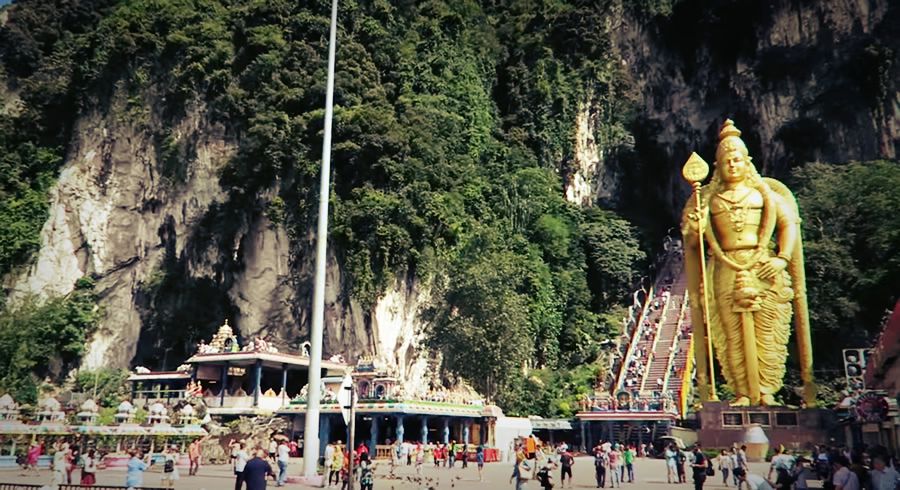
Batu Caves is open daily from 6:00am to 9:00pm, and entry to the main Temple Cave is free. The best time to visit is before 9:00am on a weekday, when the 272 steps are cool and the tour buses have not arrived. The side caves charge separately (Ramayana Cave RM15), and a dress code applies. Here are the current hours, fees and the practical details, checked July 2026.
Quick facts
| Opening hours | 6:00am–9:00pm daily; start the climb by 8:30pm |
| Entrance fee | Temple Cave free · Ramayana Cave RM15 · Dark Cave closed |
| Best time | weekday mornings before 9:00am |
| Distance from KL Sentral | about 13 km north |
| KTM Komuter fare | RM2.60 one-way (about RM2.30 cashless), 30–40 minutes |
| Visit duration | 1.5–2 hours for the main cave; add an hour for side caves |
Want it explained, not just climbed? Our guided Batu Caves private tour covers the temple’s stories, the side caves and hotel pickup from KL, timed to beat the crowds.
Opening hours and entrance fees
The temple complex opens at 6:00am and closes at 9:00pm, every day of the year. Aim to start the staircase by 8:30pm at the latest; attendants stop late climbers so the cave can clear by closing. Morning prayers happen around opening time, and the complex is busiest between 10:00am and 4:00pm.
The main Temple Cave is free, with no ticket or booking. The paid attractions sit at the base of the hill:
| Attraction | Fee | Hours |
|---|---|---|
| Temple Cave (main) | free | 6:00am–9:00pm |
| Ramayana Cave | RM15 | 9:00am–6:00pm |
| Cave Villa | RM15 (RM7 with MyKad) | 8:30am–5:30pm |
| Dark Cave | closed to the public | since 2019 |
Two corrections to what most guides say. The Ramayana Cave fee went up recently: visitors in early 2026 paid RM15, not the RM5 that older articles still quote. And the Dark Cave, the conservation cave with the guided eco tours, has been closed since January 2019 and has not reopened; ignore any guide selling it as an attraction.
How to get to Batu Caves from KL
The KTM Komuter train is the simplest way: the Batu Caves–Pulau Sebang line runs direct from KL Sentral to Batu Caves station in 30 to 40 minutes for RM2.60 (slightly less with a Touch ‘n Go card). Batu Caves is the terminus and the station exit faces the temple entrance, so there is no way to get lost. Trains run every 30 to 60 minutes, so check the return timetable when you arrive.
A Grab from central KL costs around RM20 and takes 15 to 25 minutes without traffic. Driving takes the same route, and parking at the site is straightforward outside festival days.
For platform details, first and last train times, and how the taxi touts at the exit work, see our full guide on how to visit Batu Caves from KL.
The 272 steps and the Murugan statue
The rainbow staircase is the site’s signature: 272 steps painted in 2018, climbing past monkeys and temple roofs to the Temple Cave mouth. The climb takes 15 to 20 minutes at an easy pace, and there is no fee and no restriction beyond the dress code. We cover pacing, the handrail sides to avoid (monkey territory), and accessibility in our guide to climbing the 272 steps at Batu Caves.
Beside the staircase stands the 42.7-metre golden statue of Lord Murugan, the tallest Murugan statue in the world and the standard first photo of every visit. Its story, from construction to consecration, is in our guide to the Murugan statue.
Watch your belongings on the stairs. The macaques are quick, practised thieves: keep phones zipped away, hold nothing edible, and skip the plastic bags entirely.
Dress code
Batu Caves is an active Hindu temple, and the rules are enforced at the bottom of the staircase: shoulders and knees covered, for men as well as women, with checks applied more strictly to women. If your clothing does not pass, you can buy a sarong at the entrance for RM10 to RM15 (the old cheap rental with deposit is gone). Shoes come off inside the shrine areas, not on the stairs.
What passes, what gets stopped, and what to wear in the heat is covered in our Batu Caves dress code guide.
History and festivals
The limestone hill is around 400 million years old; the temple inside it dates to 1891, when Tamil trader K. Thamboosamy Pillai dedicated the main cave to Lord Murugan. How a cave became one of the most important Hindu sites outside India is a story worth knowing before you climb, and it is told in our history and significance of Batu Caves guide.
The peak of the calendar is Thaipusam, when more than a million devotees and spectators fill the site over the festival period. The next Thaipusam falls on Friday, 22 January 2027. Visiting during the festival is a different event entirely, nothing like a normal day at the caves; visiting for a quiet look two days either side of it is a mistake. Dates, what happens, and how to attend respectfully are in our guide to Hindu festivals and events at Batu Caves.
Best time to visit
Weekday mornings, before 9:00am. You get the staircase in shade, temperatures under 30°C, and the Temple Cave before the tour groups land mid-morning. Sunrise visits work too: the site opens at 6:00am and photographers get the statue in soft light before 7:30am.
Avoid weekends after 10:00am if you can, and treat public holidays as festival-level crowds. Rain is a real factor from October to December; the steps are safe when wet but the climb is less pleasant. If your schedule only allows an afternoon, aim for after 4:00pm when the heat and the buses both ease off.
Frequently asked questions
What time does Batu Caves open?
The complex is open 6:00am to 9:00pm every day, including public holidays. Start the staircase by 8:30pm at the latest. The side attractions keep shorter hours: Ramayana Cave 9:00am to 6:00pm, Cave Villa 8:30am to 5:30pm.
Is there an entrance fee?
The main Temple Cave is free, with no ticket needed. The Ramayana Cave charges RM15 (raised recently; older guides still say RM5) and Cave Villa charges RM15, or RM7 for Malaysians with MyKad. The Dark Cave has been closed to the public since 2019.
When is the best time to visit?
A weekday morning before 9:00am: cooler air, shaded steps and thin crowds. The busiest window is 10:00am to 4:00pm, especially weekends. During Thaipusam (next: 22 January 2027) expect over a million visitors across the festival period.
How do you get there from KL?
Take the KTM Komuter from KL Sentral to Batu Caves station: 30 to 40 minutes, RM2.60, and the terminus sits at the temple entrance. Trains run every 30 to 60 minutes. A Grab costs about RM20 and takes 15 to 25 minutes outside peak traffic.
Is there a dress code?
Yes, and it is enforced at the base of the stairs: shoulders and knees covered for both men and women. Sarongs are sold at the entrance for RM10 to RM15 if your clothing does not pass. Shoes come off inside the shrine areas.
How long does a visit take?
Plan 1.5 to 2 hours for the staircase, the Temple Cave and photos at the Murugan statue. Add roughly an hour if you include the Ramayana Cave or Cave Villa, and slightly more on weekends when the stairs move slowly.
What is the Ramayana Cave?
A separate cave at the base of the hill, about 90 steps up, filled with dioramas and painted statues telling the story of the Ramayana epic. Entry is RM15 and it opens 9:00am to 6:00pm. It is the best of the paid caves and takes about 30 minutes.
Prefer a guide who knows the stories? Our guided Batu Caves private tour pairs the caves with the temple’s history, timed for the quiet morning window, with KL hotel pickup.


Comment (0)