
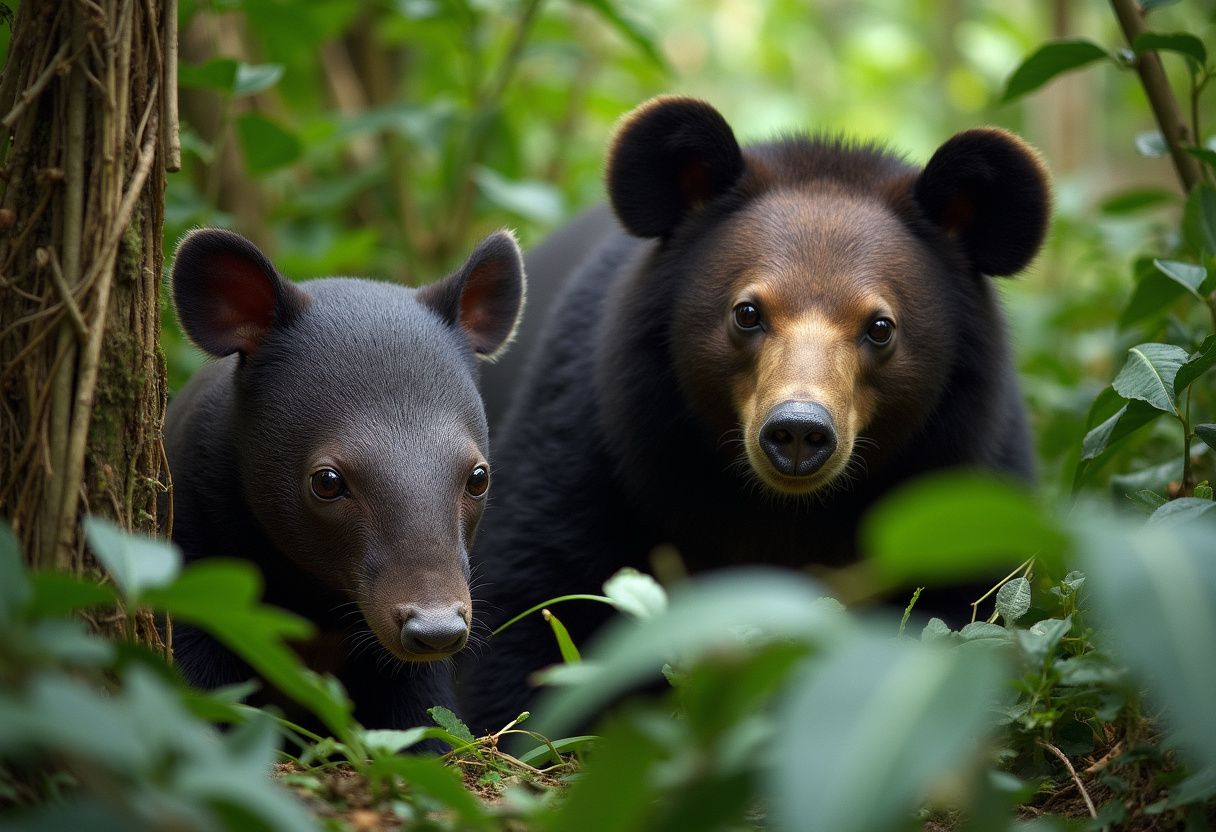
On a typical Taman Negara visit you will see macaques, monitor lizards, hornbills, squirrels and a lot of remarkable insects. Tigers, elephants and tapirs live here, but sightings are rare to effectively zero, whatever other websites promise. This 130-million-year-old rainforest hides its big mammals well. Below is the realistic breakdown, species by species, and the activities that genuinely improve your odds, from a company that has guided this park for years.
Realistic sighting odds at a glance
| Species | Realistic odds | Best activity |
|---|---|---|
| Long-tailed and pig-tailed macaques | very high | any day walk, around park HQ |
| Water monitor lizards | high | riverbanks, boat trips, warm afternoons |
| Hornbills (five species) | moderate | canopy walkway and river, at dawn |
| White-handed gibbons and siamang | you will hear them; seeing is luck | canopy walkway, 6:30–9:00am |
| Sambar, barking and mouse deer | low to moderate | salt-lick hides at night, Lubok Simpon |
| Malayan tapir | low, best of the big three | overnight riverside hide, pre-dawn |
| Asian elephant | very low; tracks and dung, rarely the animal | deep interior, Sungai Relau side |
| Malayan tiger | effectively nil; camera traps only | no tourist activity sees tigers |
| Best season | March–September dry season | monsoon (Nov–Jan) closes trails and boats |
| Guided or solo? | guides transform the small-fauna experience | short HQ trails are fine solo |
Want a guide who spots what you’d walk past? Our guided Taman Negara wildlife day tour covers the canopy walkway, jungle trails and river crossing with a licensed guide and KL hotel pickup.
The headline species, honestly
Malayan tiger: you will not see one, and that is the truth. Fewer than 150 remain in the whole of Peninsular Malaysia, and Taman Negara is their single largest recovery landscape. The encouraging news is real: camera traps have recorded a recovering breeding population here, including a mother with cubs in late 2025. But tiger evidence means camera traps and the occasional track; there are no credible tourist sightings. Any tour that implies otherwise is selling you a story.
Asian elephant: tracks yes, elephants almost never. You may well see dung and footprints on deeper trails, and the Sungai Relau side of the park (Merapoh) records the most sign. Sightings are exceptional; one park guide puts his own count at three in ten years of daily work.
Malayan tapir: the realistic “big” target. Rare, but the most attainable of the big three. Your best odds are an overnight stay in a riverside salt-lick hide such as Bumbun Tabing or Bumbun Kumbang, awake in the hours before dawn. Some visitors get a tapir or sambar deer at the lick; many watch an empty clearing all night. That gamble is the honest price of a real jungle.
What you will actually see: long-tailed macaques around HQ and the riverbanks (keep bags closed), water monitors basking along the Tahan River on warm afternoons, and hornbills, five species including the rhinoceros and great hornbill, crossing the river at dawn and dusk. During the April–August fruiting months, hornbill groups get noticeably larger. Gibbons and siamang own the dawn soundtrack; hearing them is near-guaranteed at first light, seeing them high in the canopy takes luck and binoculars. Around quieter trails, sun bears, dusky langurs, porcupines, civets and the superbly camouflaged Malayan peacock-pheasant are all present, all shy, all occasional.
How to actually see wildlife
Day walks (Bukit Teresek, HQ boardwalks). Expect primates, monitors, squirrels, birds and outsized insects, not mammals. The forest is dense and everything smells you coming. These trails are fine solo.
The canopy walkway. Go at opening, 6:30 to 9:00am, when hornbills fly between the emergent trees and the gibbon calls carry. By mid-morning it is a (spectacular) walkway, not a wildlife platform. Whether it justifies the queue is a fair question; our canopy walkway guide weighs it honestly.
River boat trips. Monitor lizards on the banks, kingfishers, macaques at the water’s edge, and the best scenery in the park. The boats also reach the riverside hides, which is where the genuine tapir odds live.
Overnight hides. A licensed guide, a wooden hide over a salt lick, and patience. This is the one activity where deer and tapir sightings stop being marketing and become a real, if modest, possibility.
Night activities. A different cast entirely, covered next.
The night safari, explained properly
There are two different night products at Kuala Tahan, and most articles blur them.
The night jungle walk happens inside the park with a licensed guide: expect UV-glowing scorpions, tarantulas, stick insects, frogs, sleeping birds and geckos. It is a close-up small-creatures show, and a good guide makes it the most surprising ninety minutes in the park.
The 4WD night safari drives the plantation and scrub outside the park boundary, because that open edge habitat is where nocturnal mammals hunt. Realistic sightings: wild boar, deer, owls, snakes, and with luck a leopard cat, civet, slow loris or flying squirrel. Be aware of the honest catch: you are spotlighting an oil-palm landscape, not rainforest, and reviews split between “saw a leopard cat, loved it” and “drove around a plantation and saw two boars”. Luck and the guide’s eyes decide it.
Timings, prices and what each option suits are in our full Taman Negara night safari guide.
Best season for wildlife
Aim for the dry season, March to September, with April to August the sweet spot: lower rivers, firmer trails, deeper access, and the hornbill fruiting season. The east-coast monsoon (November to January) swells the rivers, closes trails and hides, multiplies the leeches, and suppresses animal activity; the scenic Kuala Tembeling boat route only runs roughly April to September, and parts of Kuala Tahan village wind down. The park stays technically open in monsoon, but you would be visiting the logistics, not the wildlife. Getting-there details are in our guide to reaching Taman Negara from KL.
Is Taman Negara worth it for wildlife?
Yes, if you come for what it is: the world’s oldest rainforest, heard and felt as much as seen. The dawn gibbon chorus, hornbills overhead, a monitor lizard the size of a dog, scorpions glowing under UV, and the knowledge that tigers genuinely walk the same ground somewhere beyond the trees. No, if your measure is guaranteed big-mammal photos; that is Africa, not Malaysia’s interior. The visitors who leave disappointed are the ones who arrived expecting a safari. Come with a guide, a dawn start and honest expectations, and it delivers something rarer than a sighting: a jungle that owes you nothing.
Frequently asked questions
What animals live in Taman Negara?
Around 150 mammal species including Malayan tigers, Asian elephants, tapirs, sun bears, gaur and deer, plus some 350 or more bird species (five hornbills among them), white-handed gibbons, siamang, macaques, langurs, monitor lizards, pythons and a spectacular insect world. Most large mammals stay in the deep interior, away from visitors.
Can you see tigers in Taman Negara?
Realistically, no. Fewer than 150 Malayan tigers survive in all of Peninsular Malaysia, and although Taman Negara is their largest stronghold with a recovering breeding population on camera traps, there are no credible tourist sightings. Treat any tour promising tigers as a red flag.
How likely are you to see wildlife?
You will almost certainly see macaques, monitor lizards, birds and impressive insects. Hornbills and gibbon calls are likely at dawn. Deer and tapir are possible at overnight salt-lick hides. Elephants are tracks-and-dung rare, and tigers are camera-trap only. The forest is dense; animals detect you long before you detect them.
What’s the best way to see animals?
Dawn, guides and hides. Do the canopy walkway at 6:30am for hornbills and gibbon calls, take a licensed guide who can find camouflaged wildlife you would walk past, and if you are serious, book an overnight salt-lick hide for the only realistic tapir and deer odds in the park.
Is the night safari worth it?
Know what you are buying. The in-park night walk is a reliable small-creatures show: scorpions, tarantulas, frogs, sleeping birds. The 4WD safari spotlights plantation edges outside the park; on a good night that means a leopard cat or civet, on a quiet night it means boars. Both are cheap; take the walk first.
When is the best time of year for wildlife?
March to September, ideally April to August: dry trails, low rivers, accessible hides and hornbill fruiting season. Avoid November to January, when the monsoon closes trails and the seasonal boat route, and animal activity drops with the rain.
See it with eyes that know the forest. Our guided Taman Negara wildlife day tour runs from KL with a licensed guide, canopy walkway entry and river crossing included.


Comment (0)